 by
by Introduction
Wadi al-Jinn, also known as the Valley of the Jinn, has built a reputation on rumors. People go expecting supernatural events—cars moving on their own, silence that feels too quiet, that kind of thing. The destination itself promises a bit of everything: a scenic drive, a few cultural moments, and something that may or may not be mystical, depending on how much you’re hoping to be spooked.
Our Journey
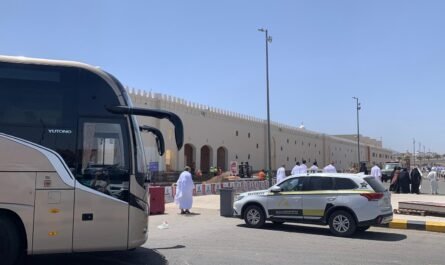
We started early, a car drive of about 40-50 minutes from Medina city. Our driver suggested 9 AM to avoid the heat. He was the practical type, not the mystical one. We’d had a quick breakfast—sandwiches and juice. It’s easy enough to order food through the Hunger Station app, but we’d already stocked up: some juice, milk, a few snacks. Nothing fancy. Just enough to say we came prepared.
The driver arrived at 9 on the dot, and we set off to experience the “magic” of Wadi al-Jinn, or at least the itinerary we’d mapped out. We’d arranged the ride a few days earlier during a trip to Masjid al-Nabawi. Somewhere between small talk and navigation, we asked if he knew any camel rides nearby. That’s when Wadi al-Jinn came up. Our son, who somehow knew about quad rides—we still don’t know how—mentioned them, and the driver confirmed. It became clear we’d hit a tourist trifecta: camel ride, quad ride, and a visit to the wadi itself.
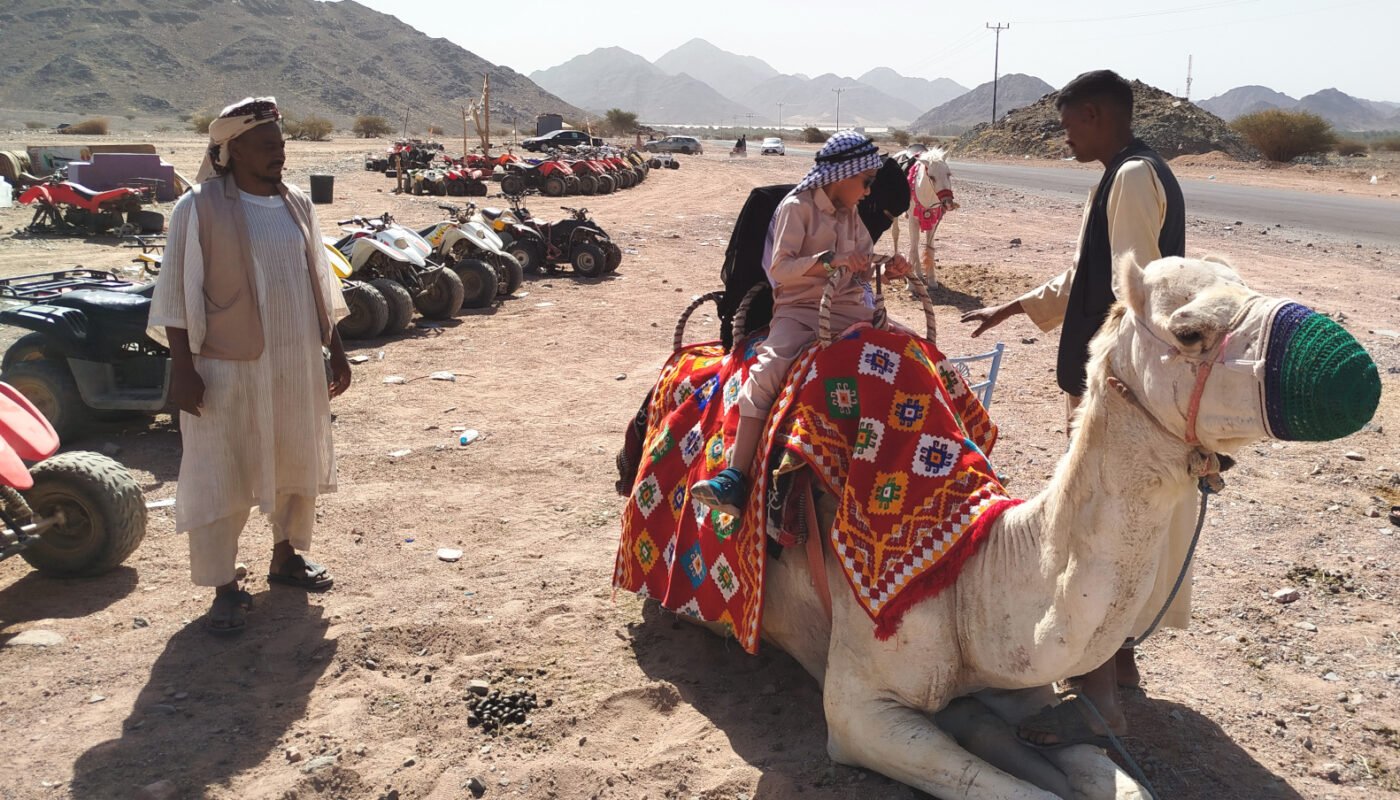
Our first stop was a dusty clearing in the middle of the desert. A few Bedouins stood by with camels and what looked like an end-of-life collection of quad bikes. The quads had clearly seen better days, possibly decades ago. Still, the Bedouins were making it work, offering rides to anyone willing to take the risk. My son was insistent, so their mechanical condition didn’t really factor in.
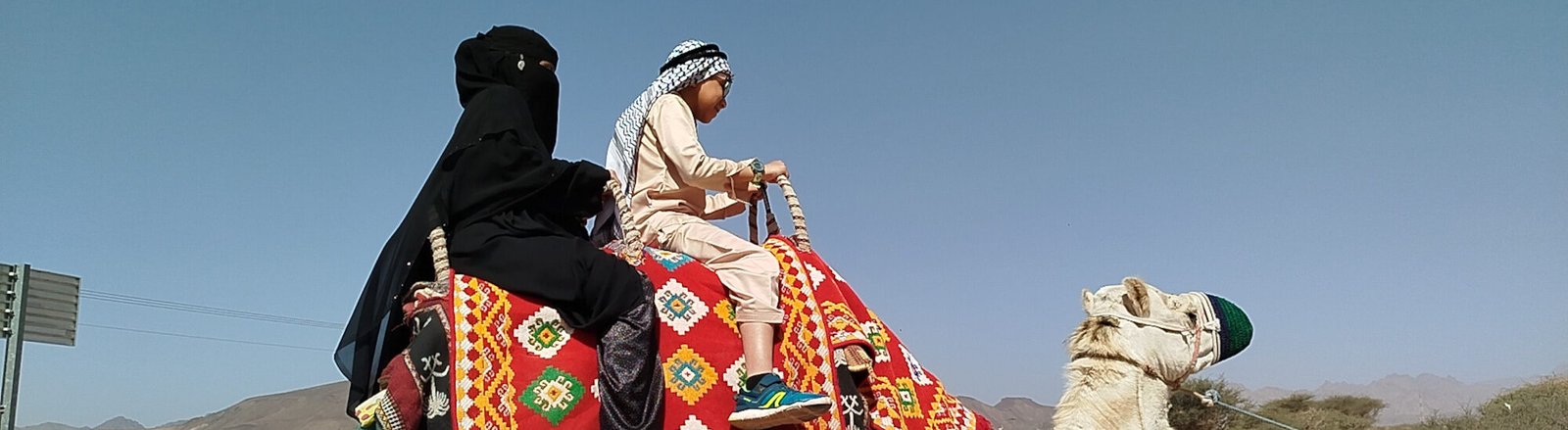
A camel ride was quoted at 10 riyals per person. I didn’t argue. I let my son and daughter climb aboard, and the camel moved a few meters before the ride was officially declared “over.” Using a handful of Arabic words and mostly tone, I voiced my disappointment. The Bedouin understood and offered to go again, this time for 20 more riyals. He smiled as he agreed, likely imagining lunch on our dime.
Looking around, I felt a mix of things—sympathy, mostly. The Bedouins were working hard under the sun, managing camels and dusty quad bikes for tourists. They weren’t charging much, and they clearly had mouths to feed. It might have been the off-season, or maybe this was just how things were. Still, there was always a certain opportunism in the air. I’ll come back to that.
My daughter had already hopped off and decided one camel ride was plenty. So I took her place, climbing up behind my son. The second ride was better—longer, at least—and I felt somewhat satisfied that it wasn’t a short loop just to justify the payment.
When we got back, my daughter was already zipping around on a quad. I assumed she and my wife had sorted out the price beforehand. They hadn’t. My son took a smaller quad, and I picked one for adults. It was my first time. He, on the other hand, took off like he’d been doing this his whole life. He handled the bike like a pro, weaving through rocks and dips like he’d trained for this.
My wife and I just stood there, watching. He looked too comfortable, which was both impressive and slightly concerning. While we were focused on him, a Bedouin jumped on a quad and headed toward our daughter. She had fallen. Her new abaya had gotten caught in the wheels and was now in tatters. We had bought it for 150 riyals at the Quba market, known as one of the cheapest markets in Medina, right next to the Majid al-Nabawi. It had been intact for less than two days.
Lesson learned: don’t wear loose clothing while riding any vehicle, especially not a quad in the desert. I had to chase my son down on another quad to stop the ride and get everyone back in one place.
With everyone safely off their vehicles, it was time to settle up. Since we hadn’t negotiated the quad prices ahead of time, the Bedouin casually quoted 50 riyals per quad. According to our driver, that was more than twice the going rate. We ended up settling at 40 riyals per quad and 20 per camel ride.
The Camel Ride Experience
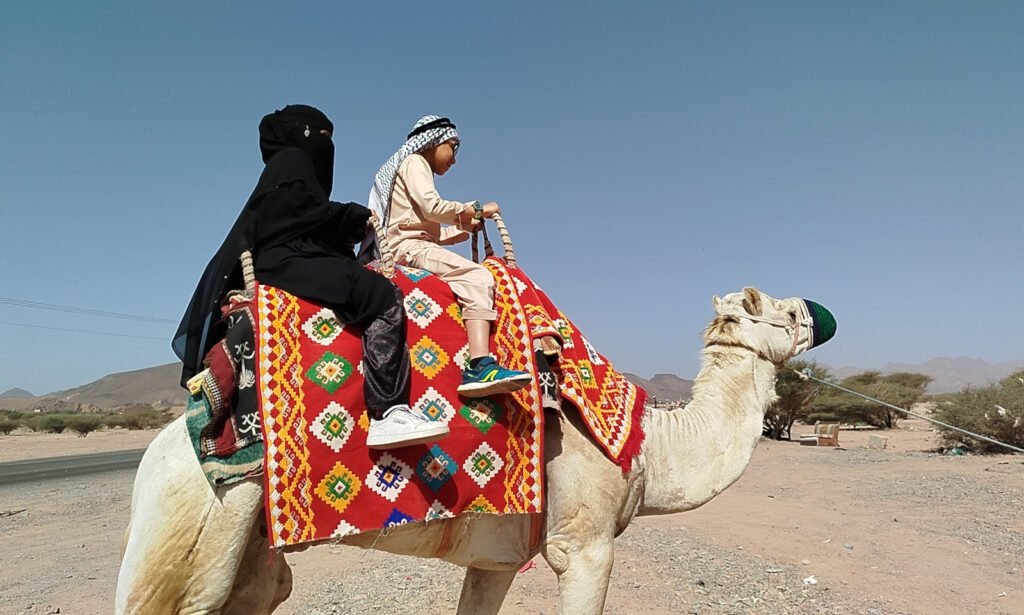
Riding a camel gives you a glimpse of something old—something people actually relied on before cars and air conditioning. There’s a slow sway to it, a rhythm that matches the pace of the desert. You feel connected to something historical. At least until your ride ends twenty feet later and someone asks for more money.
The second time around, the Bedouins took the camel a little further. I appreciated the effort. I felt like we were getting closer to what a real ride might have been like back then, minus the smartphone in my pocket.
Wadi al-Jinn: The Main Event
Our next stop was a hill where the driver demonstrated the so-called “gravity-defying” car trick—putting the vehicle in neutral and letting it roll backward. He didn’t seem particularly convinced by it himself, and his demonstration felt more like a formality than a revelation. I nodded, trying to match his level of enthusiasm, which was somewhere between mild indifference and polite boredom. It looked like a visual illusion, possibly caused by the slope of the road or maybe the shadows. Either way, it didn’t feel like the work of jinn.
When we finally reached Wadi al-Jinn, it was… okay. The surrounding mountains were beautiful. The wadi itself was quieter than expected. A few vendors were set up, selling abayas, toys, snacks, and dry fruits—prices were low, possibly to match the mood.
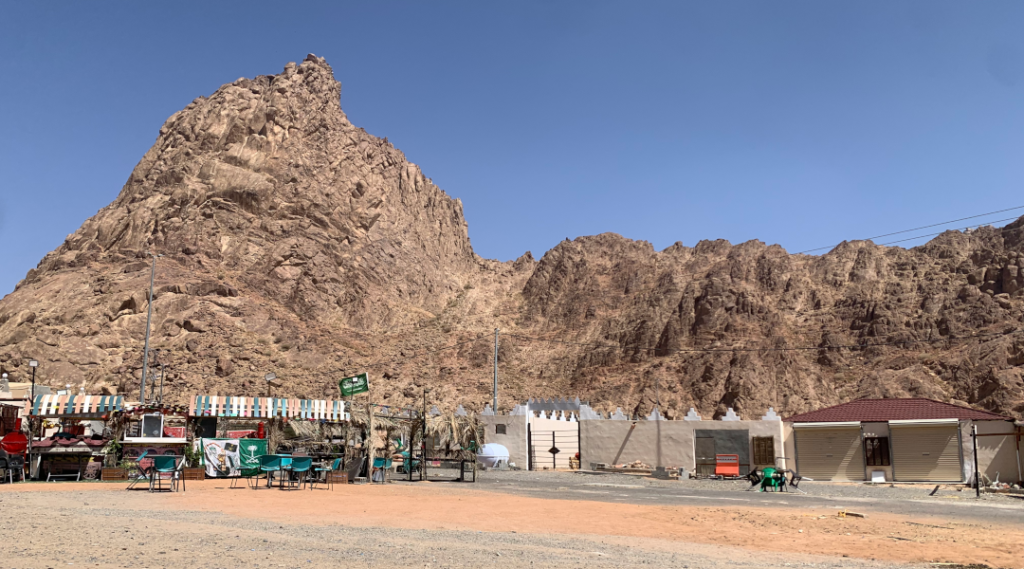
Since our daughter’s abaya had been turned into rags, we bought her a replacement from one of the stalls. It felt good to support the local vendors, even if it wasn’t part of the plan. We also picked up a few snacks and didn’t stay longer than thirty minutes. It was hot, and there wasn’t much to do. More camels were available for rides, but the earlier one, out in the desert, felt more authentic.
If you want to read more topics on our Umrah trip, then you can read them on our website https://anjumpasha.com/category/after-ramadhan-umrah-2025/ .